A welcome that knows who you are
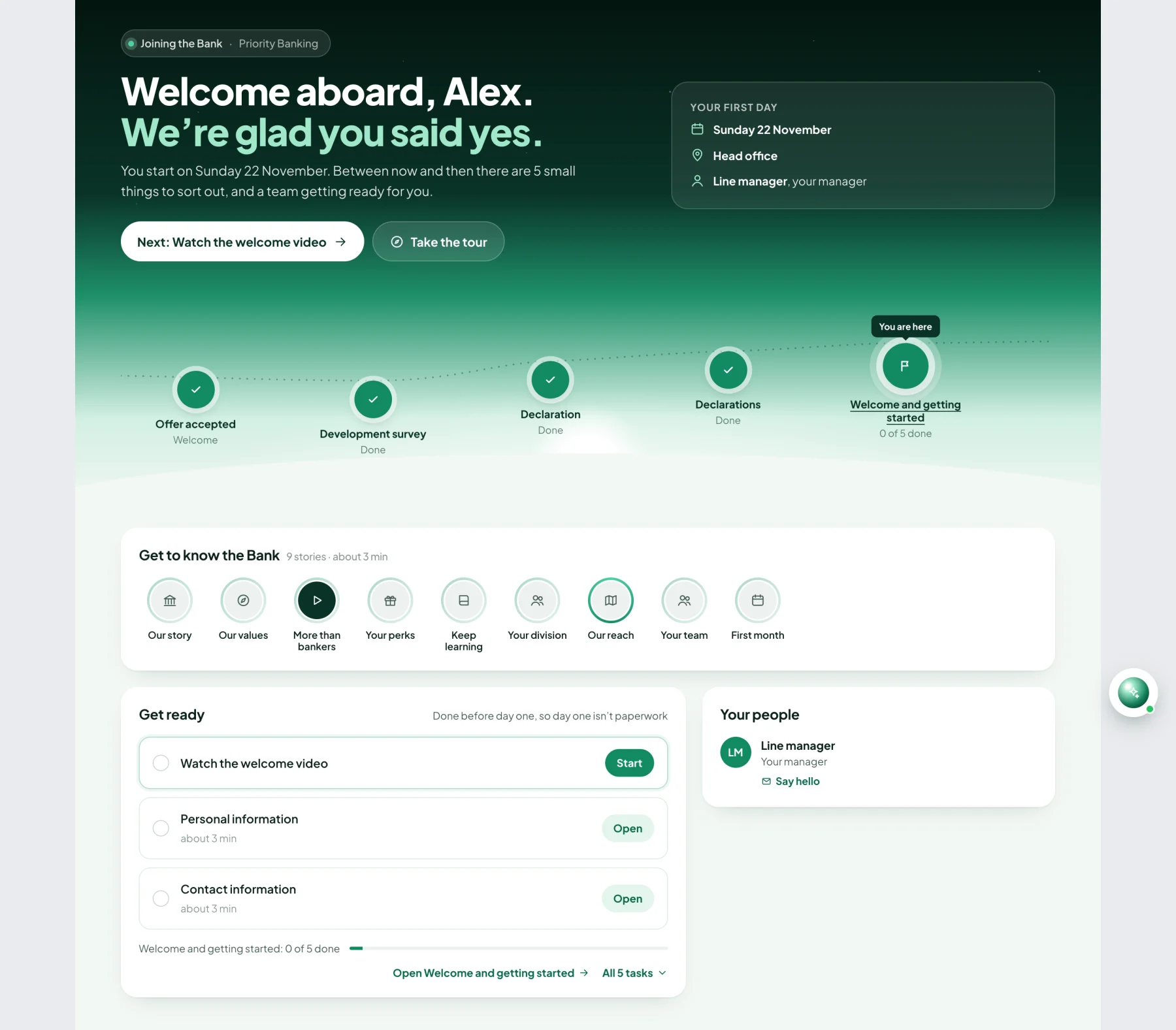
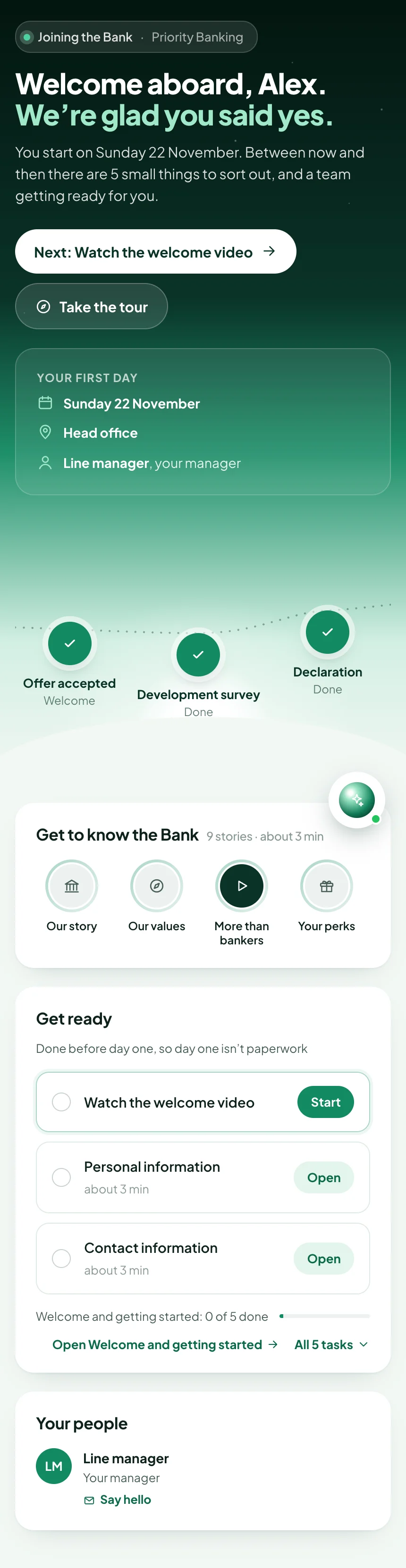
My Journeys became a personal landing page. It greets the joiner by name, shows their first day and lays every journey out as one route with "You are here". Below it sit only the tasks that matter now.

Most teams settle for one of the first two because the third one scares them. There is another route: build on top of the platform with the tools the vendor supports, and change what the page does for each person, not only how it looks.
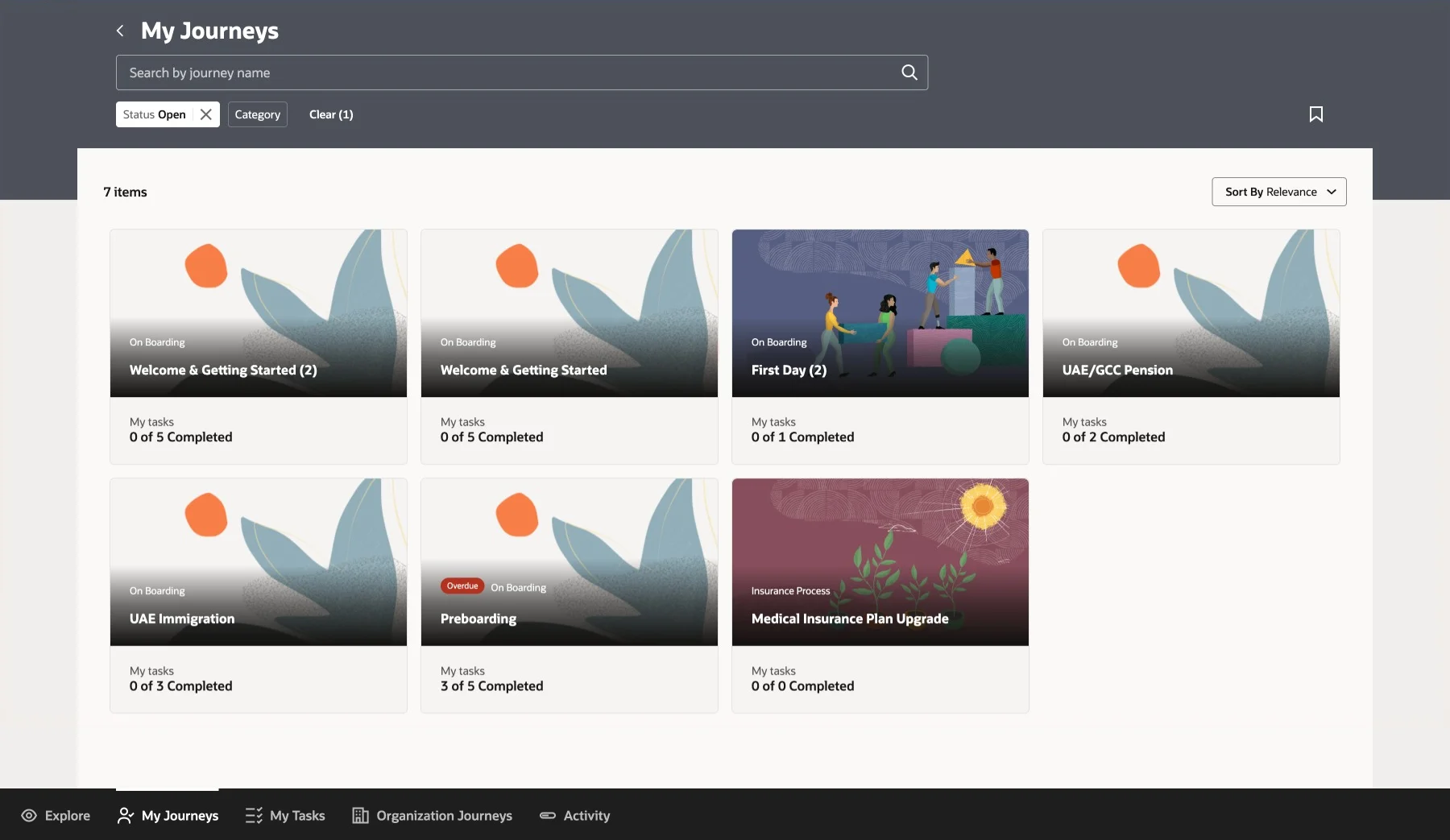
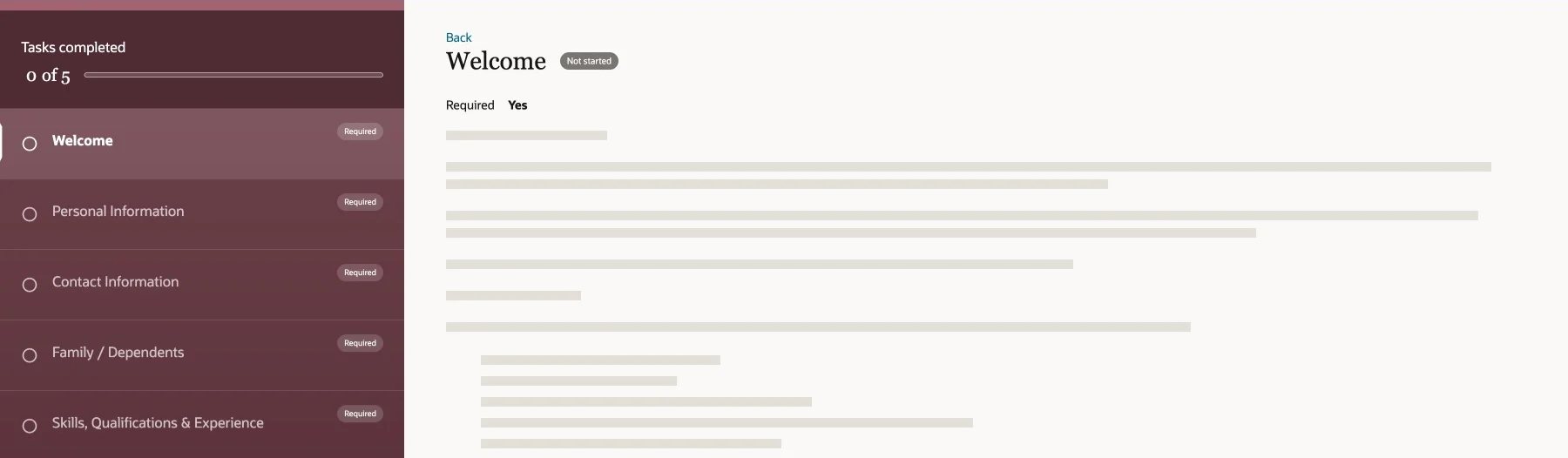
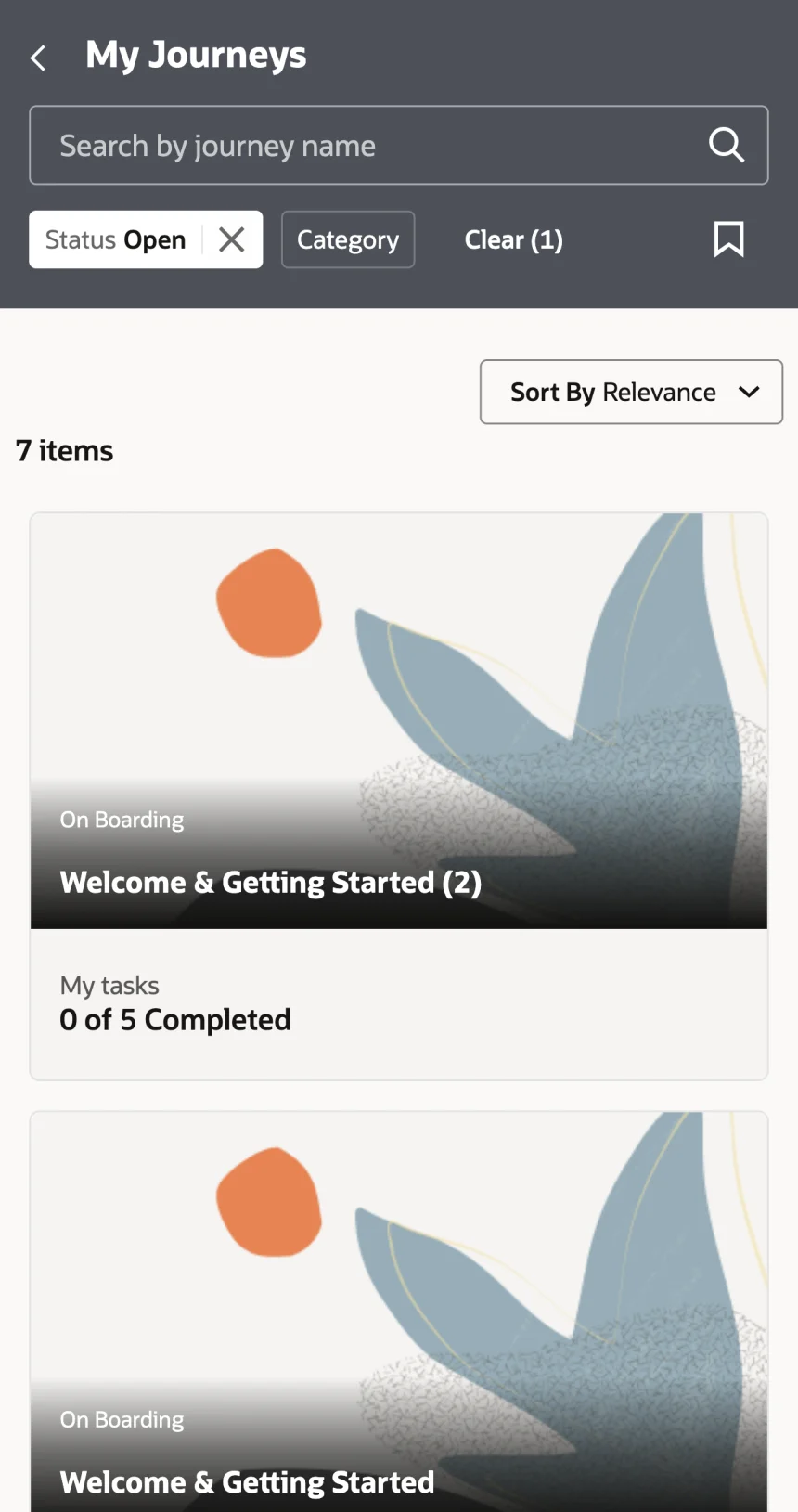
Preboarding and onboarding journeys for a regional banking group with three entities. New joiners got Oracle's standard journey pages: a grid of identical cards, a grey banner and a list of tasks. It worked, but it said nothing about the bank they had just joined, or what would happen next.
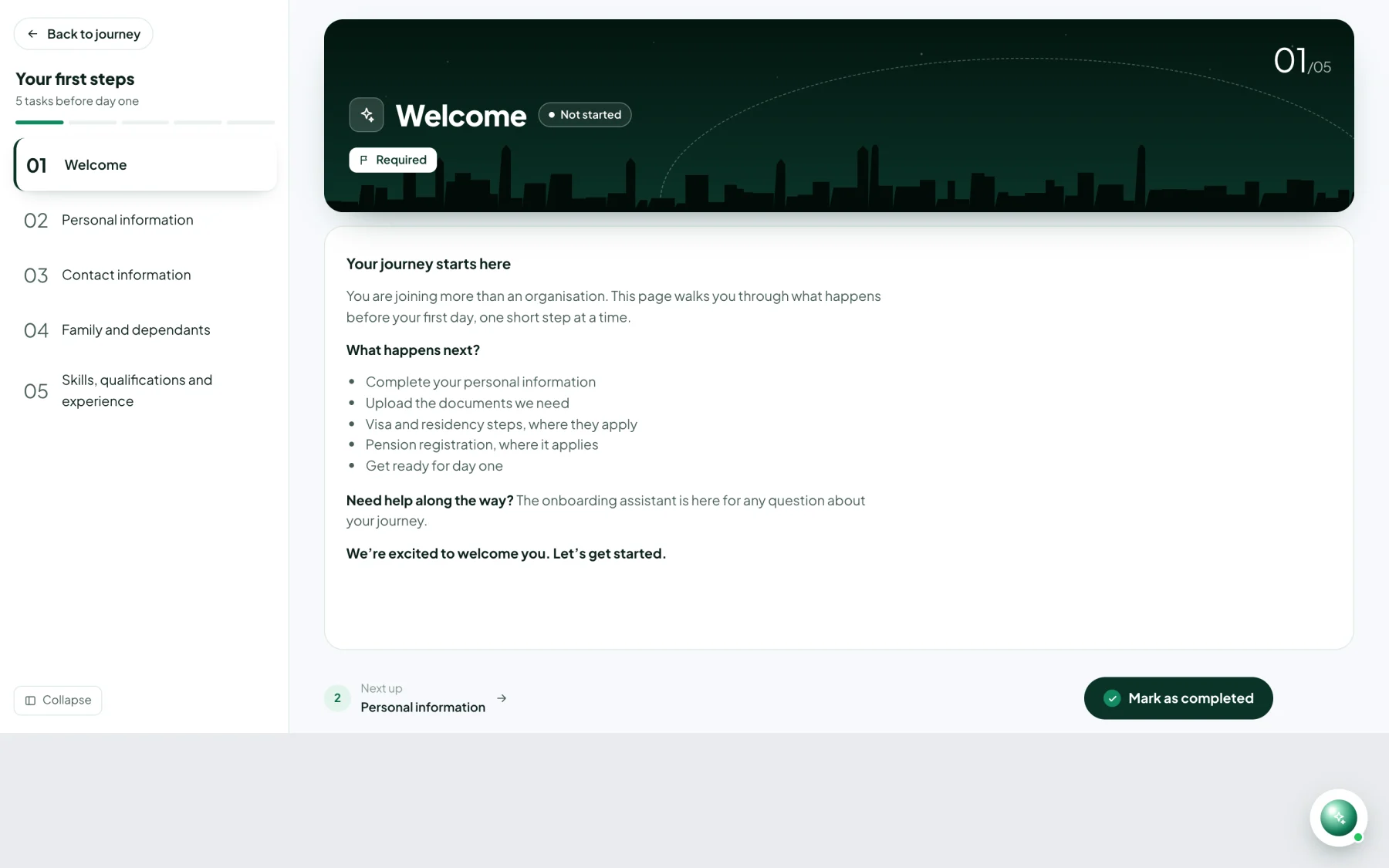
Here is what those same pages became, built in VB Studio and still running on Oracle underneath.
My Journeys became a personal landing page. It greets the joiner by name, shows their first day and lays every journey out as one route with "You are here". Below it sit only the tasks that matter now.
Every journey opens on a sky that moves from night to dawn to daylight as tasks are completed, over a city skyline.
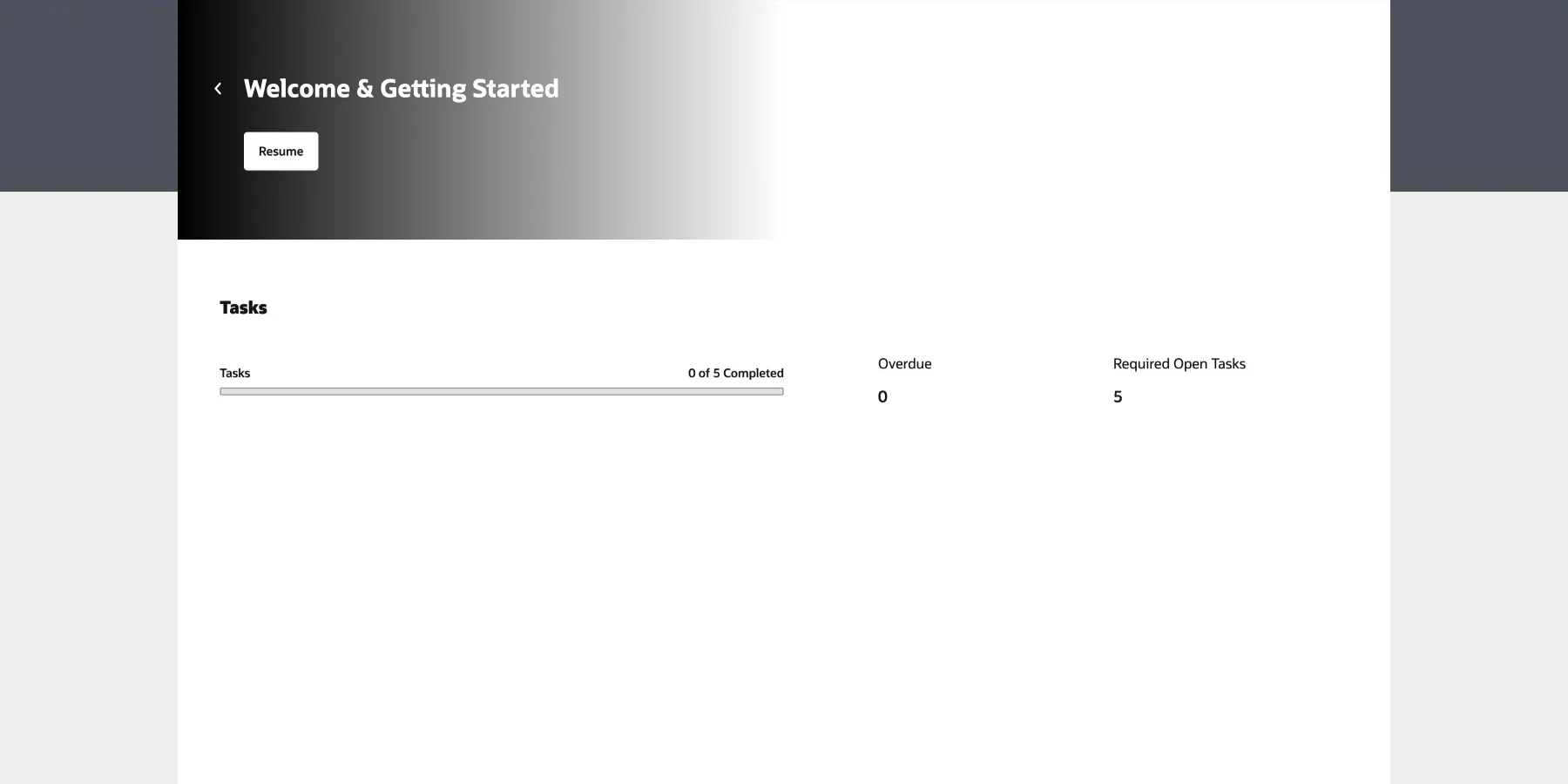
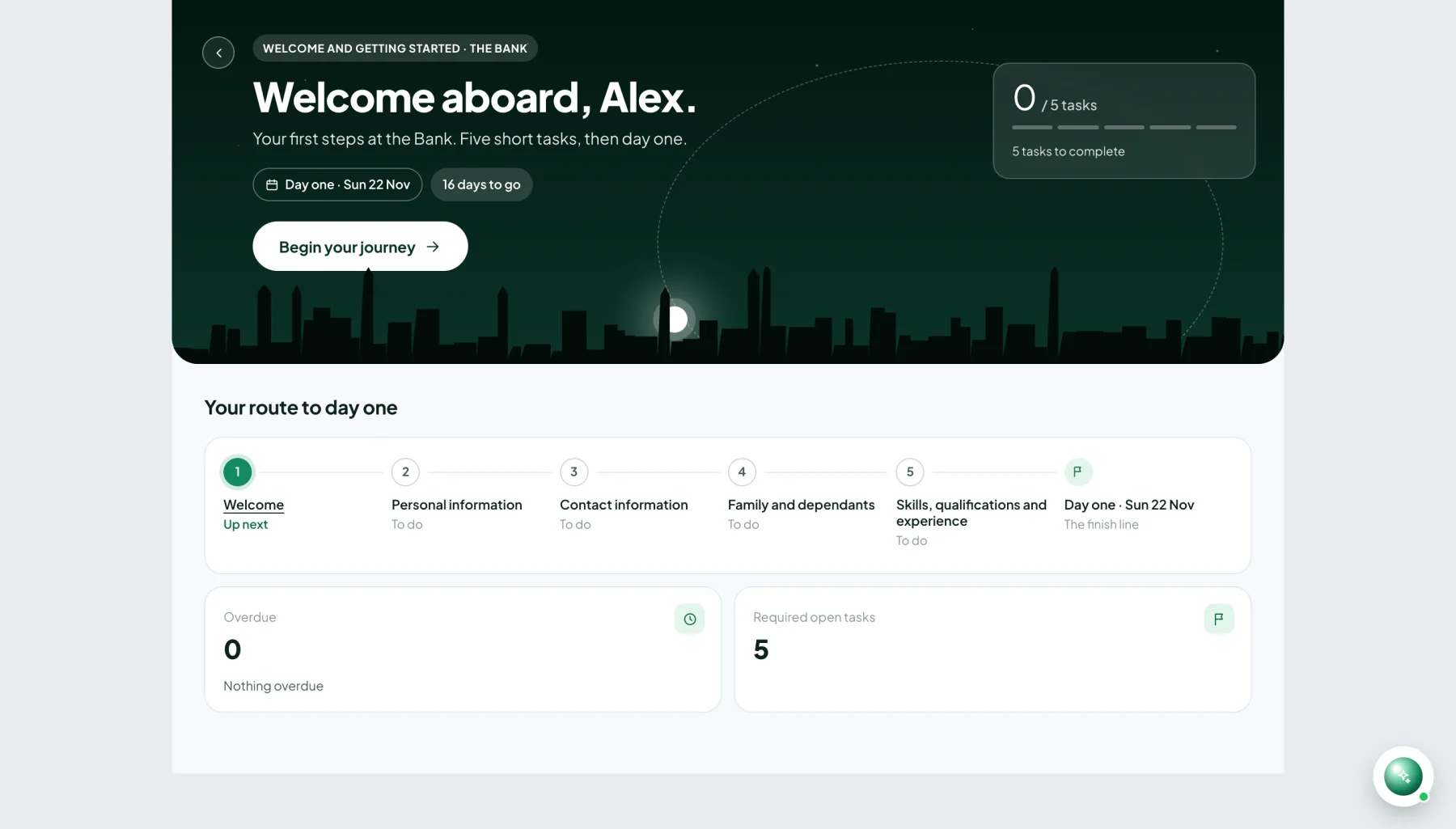
Each task page keeps the whole journey in a side rail, says what is next, and always offers a way back.
The rebuilt pages have their own narrow layout, so a joiner on a phone still gets the greeting, the first-day card and the route.
The group runs three entities on one Oracle tenant. Each joiner's experience follows their Business Unit, read live from the platform. Every colour is a token, so a new entity is a short theme file, not a rebuild.
Nothing in that work is tied to journeys. The same approach, reading who someone is and shaping the page around them, carries across the platform.
A front door that reflects each person's brand and role, and what needs their attention today.
Learning that feels like your own academy, showing each person what is due and what comes next.
Enrolment and pay pages that explain themselves in your words, so fewer questions reach HR.
Balances and requests that are easy to read, with a clear view for managers planning their team.
Goals and check-ins that read like a conversation rather than a form.
Candidate and internal job pages that carry the same brand as the rest of your company.
These show where the approach can go. They aren't delivered projects. What can change differs by page and by tenant, so discovery tests yours before anyone commits to a build.
We test the platform first: what can be extended, what security roles expose, what your tenant blocks.
Screens and flows for one audience, in your brand, shaped by what discovery proved possible.
Page modules and styling in the vendor's own tooling, which means Oracle VB Studio on Redwood.
We work alongside HR, HRIS and communications teams, in the room or remotely, so questions and sign-off don't wait.
Your team takes over the code and the content tools. HR runs the content from there.
Oracle Fusion HCM Redwood comes first. The same approach carries to Workday, SuccessFactors and ServiceNow.
We change what each page does for each person: content that follows their brand, stage and progress, guided tours and an AI assistant, designed around what they need next.
Oracle branding without a full build: your colours, fonts, logos and spacing across the platform, styled in CSS. There's no new page logic, so it's a smaller project at a smaller price.
You can start with a skin and build on it later.
The disciplines behind them
Home pages, self-service, guided flows and manager views, designed for the people who use them. We work with one audience at a time.
JavaScript page modules and styling on vendor-rendered pages, built to survive quarterly updates. On Redwood, that work happens in Oracle VB Studio.
Brand, division and lifecycle stage come from the platform's own REST APIs, within each user's security role. People see what applies to them and nothing they shouldn't.
One code base serving several brands or entities, so a fix made once reaches all of them.
Content lives apart from code, with admin and sign-off tools. HR can change a page without waiting for a release.
In-platform AI agents, such as those built in Oracle AI Agent Studio, placed where employees need them.
Documentation only tells you so much about an enterprise tenant. We test what yours really allows before anyone commits to a build.
Where the employee data and security roles live, and where the experience has to work.
Oracle's design system and the pages employees see. These are the pages we extend.
Visual Builder Studio, Oracle's tooling for Redwood extensions and the place our code is built.
Workday, SuccessFactors, ServiceNow
McAwesome is an independent studio, not an Oracle partner or reseller. All product names belong to their respective owners. We use them only to say where our work runs.
No. Onboarding is the project we can show you so far. The same approach applies to the other pages your people use, such as home pages, learning, benefits, pay and hiring. What can change differs by page, because Oracle doesn't open every page in the same way, so discovery checks yours first.
A skin or theme changes how a page looks: colours, fonts, logos and sometimes layout. If that's all you need, we offer it as a separate, smaller service. A full experience build also changes what the page does for each person: content that follows their brand, start date and progress, guided tours, and an AI assistant on the page. In our case study, a grid of identical cards became a personal landing page with a route and next steps.
Oracle's Themes page covers the basics, such as logos and header colours, and what it can change varies by release. Beyond that, a brand skin styles more of the page, and a full experience build also changes how the page works. Discovery shows which of these your tenant needs.
Oracle Visual Builder Studio, or VB Studio, is Oracle's tool for extending Redwood pages. For HCM it replaces older tools such as Page Composer and Transaction Design Studio, and Oracle provides an instance for each of your non-production environments. We start there, on your test environment, before anything reaches production.
Yes, by staying inside the extension model. We build page modules and styling in Oracle VB Studio, so Oracle's own code stays as it is and your extensions sit on top. Nobody can promise that a quarterly update will never affect a page, so extensions still need checking in a test environment before each update reaches production. We plan for that from the start and tell you which parts are most exposed.
Oracle Journeys is built for guided tasks and checklists, and an onboarding experience doesn't need to replace it. The design work covers what surrounds those tasks: welcome pages, brand and personalised content. Discovery shows how the two fit together in your tenant, and what the experience can sit on if you don't use Journeys.
Yes. One code base can read each employee's brand from platform data through the REST APIs, then apply the right styling and content. Our onboarding project in the UAE worked this way across multiple brands and business units.
Both. McAwesome is based in Dubai, and on our onboarding project in the UAE we worked directly with HR, HRIS and communications teams on site. We also work remotely, so being elsewhere isn't a barrier. Tell us where you are and we'll work out how much on-site time the project needs, if any.
The approach carries over, but the details don't. Each platform has its own extension model and its own limits, which is why every engagement starts with discovery. Oracle Fusion HCM Redwood is our first platform, and we'll be clear about anything that would be new ground for us.
No. McAwesome is an independent studio. Oracle is a platform we build on, and we don't resell Oracle products. Your licences and your relationship with Oracle stay exactly as they are.